Anti-Aging & Longevity

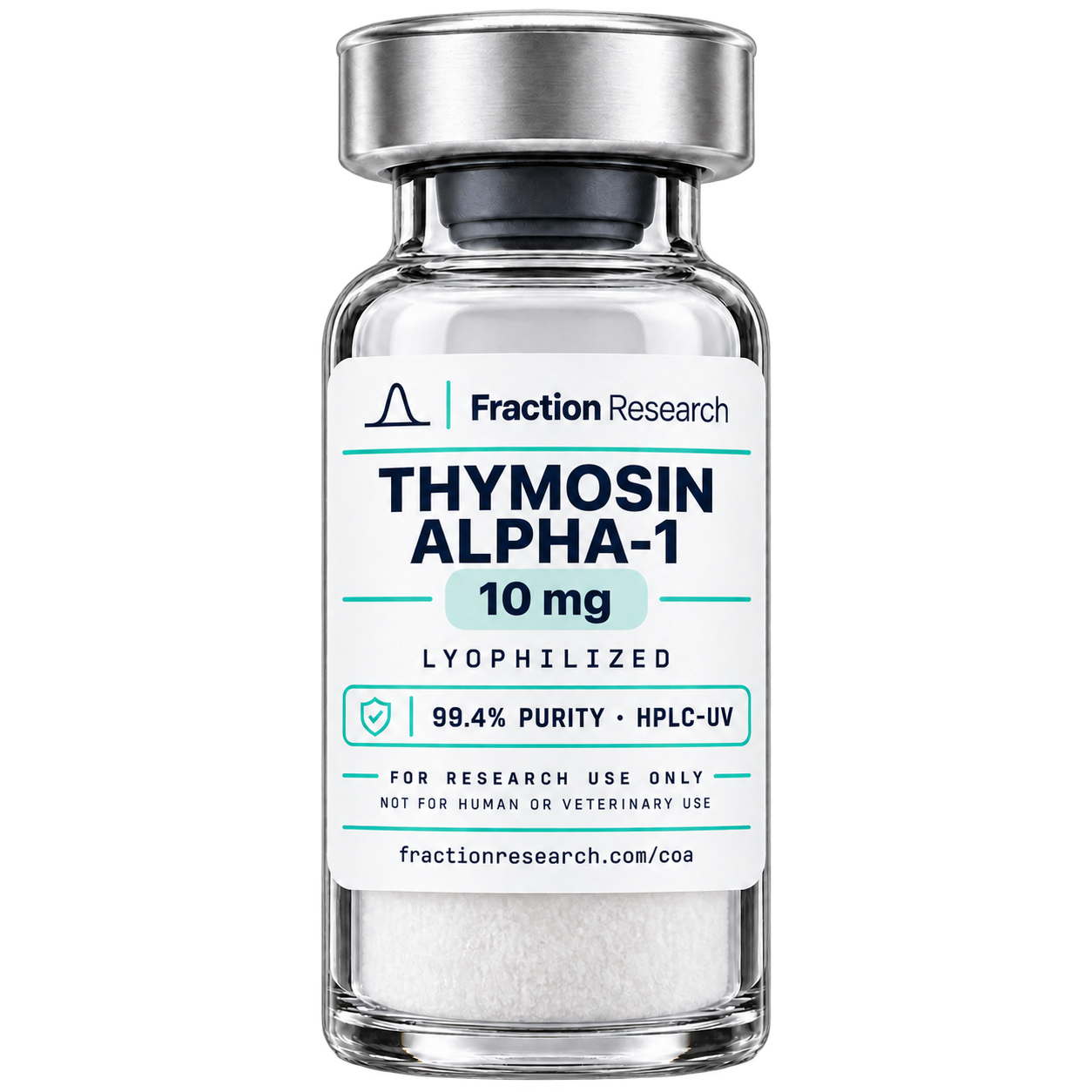
Thymosin Alpha-1

Price range: $23.99 through $59.99

Current Lot WWB-TA10-3421 verified Mar 2, 2026

N-acetylated thymic 28-amino acid peptide

CAS Number
62304-98-7
Molecular Formula
C₁₃₂H₂₁₉N₃₅O₅₃
Molecular Weight
3108.34 g/mol
Form
Lyophilized
Purity
≥99% by HPLC-UV
Cold-Packed Protected seasonal packaging
Dispatches ≤48hr From Columbia, SC
Lot Verified COA included with every order
Independently Tested HPLC-UV verified, every single lot
Lot-traceable — matched to a public Certificate of Analysis
Research Use Only — not for human or veterinary use
View Certificate of Analysis

What You Receive

1× Research Vial
  • Thymosin Alpha-1 — nominal content per selected size
  • Lyophilized
  • Tamper-evident seal
  • Lot-numbered label
  • Lot-matched Certificate of Analysis
Verification

Current Lot & Certificate of Analysis

Lot NumberWWB-TA10-3421
HPLC Purity98.74%
Test DateMar 2, 2026
Testing LaboratoryMZ Biolabs
Analytical MethodHPLC-UV, 218nm
LC-MS IdentityConfirmed
Specifications

Technical Specifications

CAS Number 62304-98-7
Molecular Formula C₁₃₂H₂₁₉N₃₅O₅₃
Molecular Weight 3108.34 g/mol
Physical Form Lyophilized
Purity Specification ≥99% by HPLC-UV
Analytical Method HPLC-UV, 218nm
Appearance Lyophilized research peptide
Storage Conditions Store sealed, protected from moisture and light; minimize temperature cycling
Lot Number WWB-TA10-3421
Batch / Test Date Mar 2, 2026
Research Context

Research Overview

Thymosin alpha-1 is a 28-amino-acid peptide originally isolated from thymosin fraction 5, a preparation derived from thymus tissue. It is studied in the literature as an immunomodulator, and among the compounds in this catalogue it has one of the longest records of controlled clinical investigation, concentrated in chronic viral hepatitis.

Mechanistic context

The published mechanistic account concerns T-cell maturation and function, with reported effects on T-lymphocyte differentiation, natural killer cell activity and cytokine production. Activity at Toll-like receptors has also been described. The compound is characterised as modulating immune function rather than suppressing or stimulating it uniformly, which is why its clinical investigation focused on conditions where the host immune response to a persistent virus is the limiting factor.

Published findings

Andreone and colleagues (1996) reported a randomised controlled trial comparing thymosin-alpha1 against interferon alfa in patients with hepatitis B e antigen antibody-positive and HBV DNA-positive chronic hepatitis B — an active comparator design rather than a placebo comparison, which sets a higher evidentiary bar.

Chien and colleagues (1998) reported a randomised controlled trial of efficacy in chronic hepatitis B. Iino and colleagues (2005) reported efficacy and safety in Japanese patients with chronic hepatitis B from a randomised clinical trial, adding a distinct population.

Andreone and colleagues (1996) also reported a double-blind, placebo-controlled pilot trial in chronic hepatitis C, extending investigation to a second viral indication.

Scope and limitations of the evidence

The evidence base consists of randomised controlled human trials, which is unusual in this catalogue and should be recognised as a genuine strength. Both active-comparator and placebo-controlled designs appear.

The literature is nonetheless dated, concentrated in the 1996–2005 period, and the treatment landscape for chronic viral hepatitis has changed fundamentally since — nucleoside analogues and direct-acting antivirals have transformed outcomes in both hepatitis B and C. Results from trials conducted against an interferon-era standard of care cannot be read as informative about current clinical practice. The hepatitis C work is explicitly described as a pilot trial and is correspondingly limited in size.

Use in experimental design

Immunological endpoints require careful specification: T-cell subset analysis, cytokine profiling and viral load are distinct measures that need not move together, and the cited trials use virological and biochemical endpoints rather than immunological ones. Investigators interested in the proposed mechanism will find that the clinical literature addresses outcome rather than mechanism, and that the two bodies of work are largely separate.

Analytical and handling notes

Each lot is supplied with a certificate of analysis reporting RP-HPLC purity, mass identification by ESI-MS and label claim recovery, together with an independent ICP-MS elemental impurities report. Purity figures apply to the specific lot tested and should be read against the lot documentation rather than inferred from generic reference material. Storage guidance appears on the technical data sheet; the exact supplied salt form, counterion and hydration state are lot and supplier specific and should be reconciled against supplier documentation before quantitative work.

This material is supplied for laboratory research use only. It is not a drug, is not intended for human or veterinary use, and no statement above should be read as a claim of therapeutic effect.


References

  1. Andreone P, Cursaro C, Gramenzi A, et al. A randomized controlled trial of thymosin-alpha1 versus interferon alfa treatment in patients with hepatitis B e antigen antibody- and hepatitis B virus DNA-positive chronic hepatitis B. Hepatology. 1996;24(4):774-777. doi:10.1002/hep.510240404.
  2. Chien RN, Liaw YF, Chen TC, Yeh CT, Sheen IS. Efficacy of thymosin alpha1 in patients with chronic hepatitis B: a randomized, controlled trial. Hepatology. 1998;27(5):1383-1387. doi:10.1002/hep.510270527.
  3. Iino S, Toyota J, Kumada H, et al. The efficacy and safety of thymosin alpha-1 in Japanese patients with chronic hepatitis B: results from a randomized clinical trial. J Viral Hepat. 2005;12(3):300-306. doi:10.1111/j.1365-2893.2005.00633.x.
  4. Andreone P, Cursaro C, Gramenzi A, et al. A double-blind, placebo-controlled, pilot trial of thymosin alpha 1 for the treatment of chronic hepatitis C. Liver. 1996;16(3):207-210. doi:10.1111/j.1600-0676.1996.tb00729.x.

Citations are provided for research context only. They describe published work on this compound and are not claims about this product.

Fulfillment

Fulfillment & Packaging

Ships From

Columbia, South Carolina

Dispatch Timeframe

Within 48 hours of order confirmation

Cold-Chain Packaging

Insulated, seasonally adjusted packaging protects material in transit

Tamper-Evident Vial

Every vial ships sealed and lot-labeled

Shipping Area

Domestic (U.S.) shipping only

Shipping Cost

Calculated at checkout — see the Shipping Policy for full details

Questions

Frequently Asked Questions

Is this lot independently tested?

Yes. Every lot is tested by an independent third-party laboratory using HPLC-UV before it is released for sale, and results are published in the COA Library.

How do I locate my lot's Certificate of Analysis?

Use the "View Certificate of Analysis" link on this page, or search the COA Library directly by compound name or the lot number printed on your vial label.

What analytical methods are used?

Purity is determined by HPLC-UV. Molecular identity is confirmed by LC-MS prior to release.

How is the material packaged?

Material ships in a tamper-evident, lot-labeled vial inside cold-chain packaging appropriate for the season.

What does "Research Use Only" mean?

This product is sold exclusively for laboratory and in-vitro research applications by qualified researchers. It is not a drug, dietary supplement, or approved for human or veterinary use.