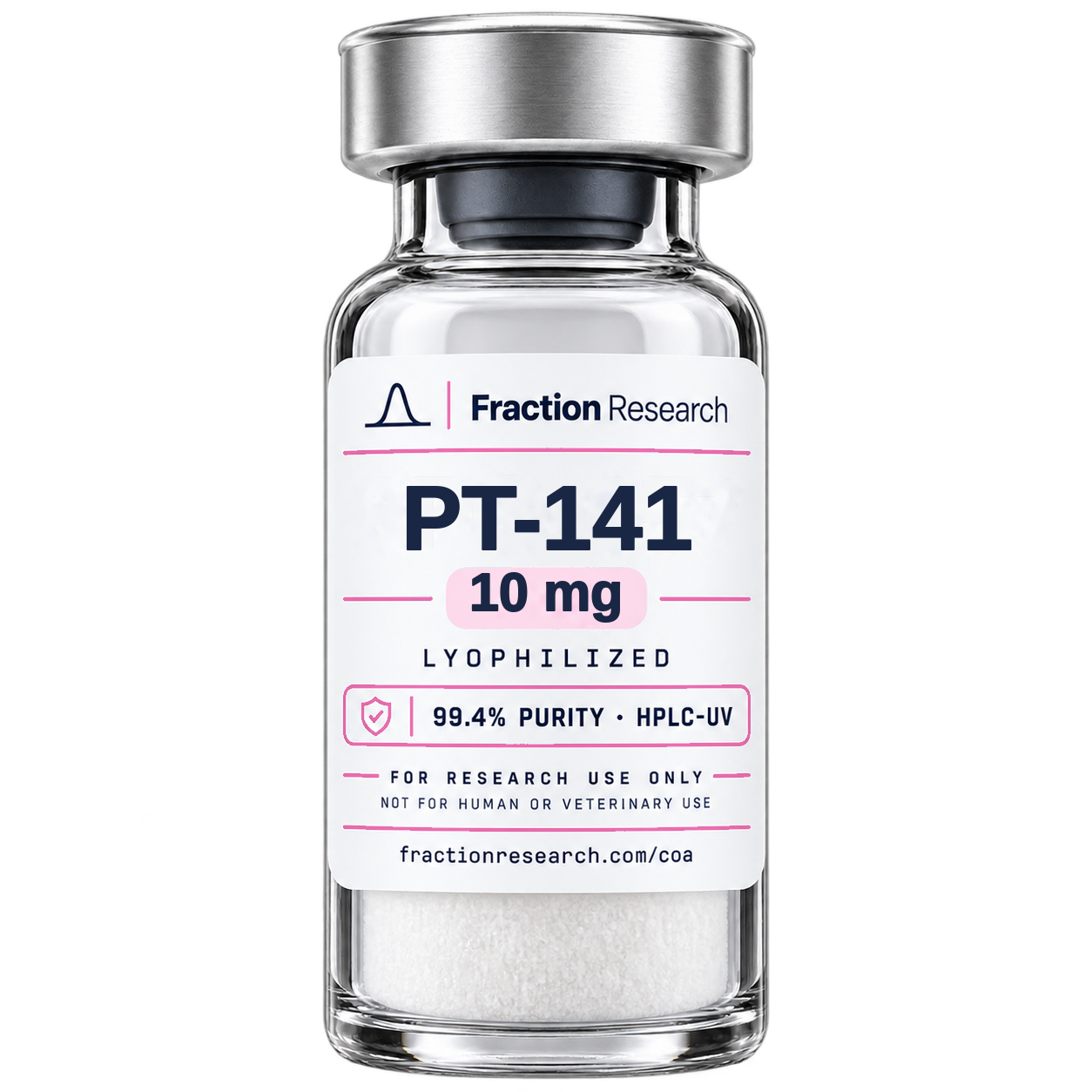
PT-141, known generically as bremelanotide, is a cyclic heptapeptide melanocortin receptor agonist. It is a metabolite of melanotan II and acts centrally rather than on peripheral vascular tissue, which distinguishes it mechanistically from phosphodiesterase type 5 inhibitors and is the reason it was investigated in populations unresponsive to those agents.
Mechanistic context
Melanocortin receptors comprise a family of five subtypes with roles spanning pigmentation, energy balance, inflammation and sexual function. Bremelanotide acts as an agonist with activity at MC3R and MC4R, receptors expressed in the central nervous system. The central site of action is the defining mechanistic feature in the published literature: the compound was studied on the premise that it acts on neural pathways rather than on local haemodynamics.
Published findings
Diamond and colleagues (2004) reported a double-blind, placebo-controlled evaluation of safety, pharmacokinetics and pharmacodynamics of intranasal PT-141 in healthy males and in patients with mild-to-moderate erectile dysfunction. Rosen and colleagues (2004) reported a parallel evaluation of the subcutaneously administered peptide in healthy male subjects and in patients with an inadequate response to sildenafil — the latter group chosen specifically to test the central-action premise.
Diamond and colleagues (2006) reported effects on subjective sexual response in premenopausal women with sexual arousal disorder. Clayton and colleagues (2016) reported a randomised, placebo-controlled dose-finding trial in premenopausal women with female sexual dysfunction — the largest and most methodologically developed study among those cited.
Scope and limitations of the evidence
Bremelanotide has a substantial human clinical literature, placing it among the better-evidenced compounds in this catalogue. The cited studies are placebo-controlled and include dose-finding work, which is a meaningful step beyond the pharmacodynamic characterisation typical elsewhere in this catalogue.
That said, the endpoints in much of this literature are subjective self-report instruments. These are the accepted measures in the field, but they carry known susceptibility to expectation effects, which is precisely why the placebo control in the Clayton design matters so much to interpretation. Investigators should also note that two administration routes appear across the cited studies — intranasal and subcutaneous — with different exposure profiles, and results are not interchangeable between them.
Use in experimental design
Route of administration is the primary design variable and should be stated explicitly, given that the early literature covers both. Where subjective instruments are the endpoint, validated scales and adequate blinding are essential; the difference in rigour between the 2004 and 2016 studies is largely a difference in these methodological features rather than in the compound itself.
Analytical and handling notes
Each lot is supplied with a certificate of analysis reporting RP-HPLC purity, mass identification by ESI-MS and label claim recovery, together with an independent ICP-MS elemental impurities report. Purity figures apply to the specific lot tested and should be read against the lot documentation rather than inferred from generic reference material. Storage guidance appears on the technical data sheet; the exact supplied salt form, counterion and hydration state are lot and supplier specific and should be reconciled against supplier documentation before quantitative work.
This material is supplied for laboratory research use only. It is not a drug, is not intended for human or veterinary use, and no statement above should be read as a claim of therapeutic effect.