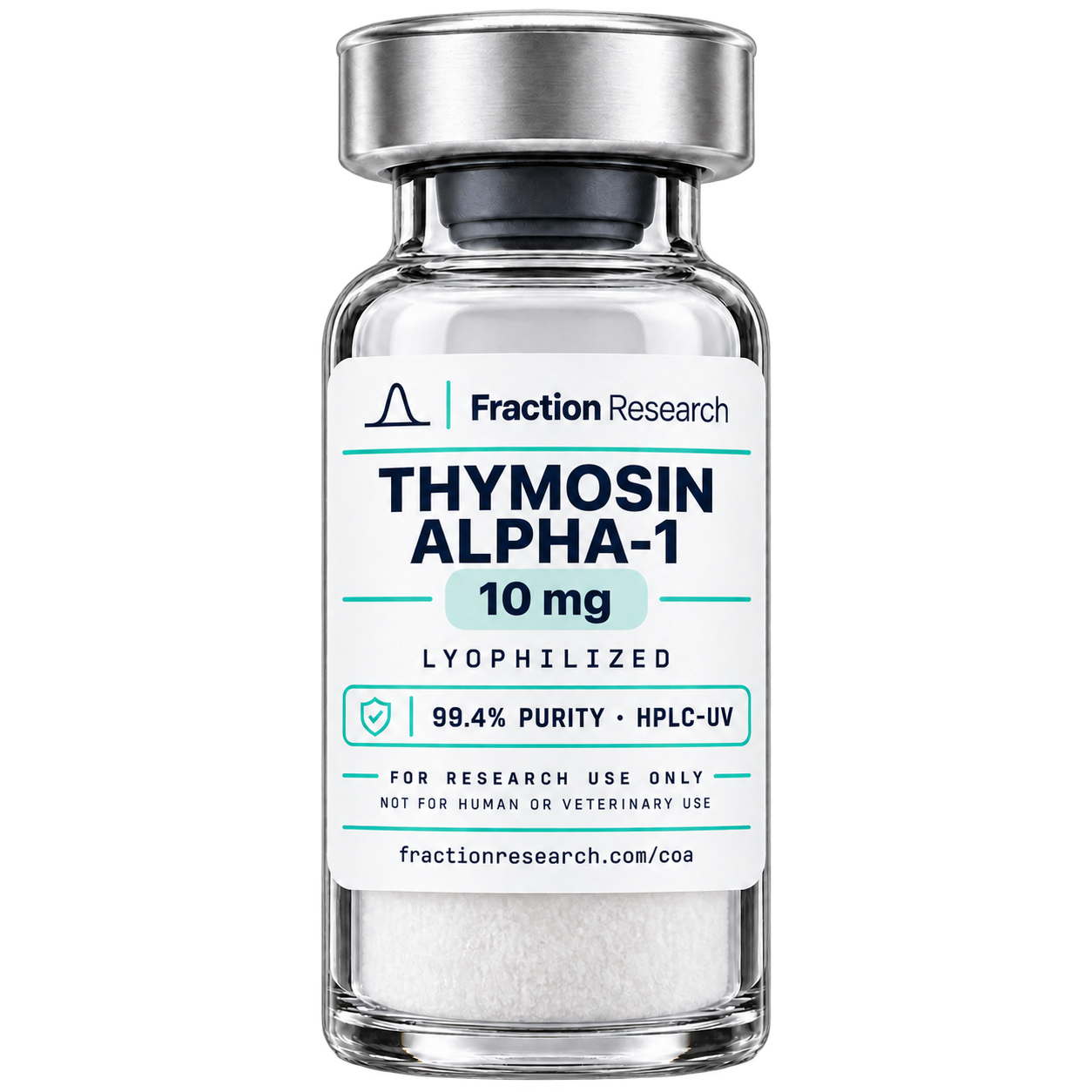
Thymosin alpha-1 is a 28-amino-acid peptide originally isolated from thymosin fraction 5, a preparation derived from thymus tissue. It is studied in the literature as an immunomodulator, and among the compounds in this catalogue it has one of the longest records of controlled clinical investigation, concentrated in chronic viral hepatitis.
Mechanistic context
The published mechanistic account concerns T-cell maturation and function, with reported effects on T-lymphocyte differentiation, natural killer cell activity and cytokine production. Activity at Toll-like receptors has also been described. The compound is characterised as modulating immune function rather than suppressing or stimulating it uniformly, which is why its clinical investigation focused on conditions where the host immune response to a persistent virus is the limiting factor.
Published findings
Andreone and colleagues (1996) reported a randomised controlled trial comparing thymosin-alpha1 against interferon alfa in patients with hepatitis B e antigen antibody-positive and HBV DNA-positive chronic hepatitis B — an active comparator design rather than a placebo comparison, which sets a higher evidentiary bar.
Chien and colleagues (1998) reported a randomised controlled trial of efficacy in chronic hepatitis B. Iino and colleagues (2005) reported efficacy and safety in Japanese patients with chronic hepatitis B from a randomised clinical trial, adding a distinct population.
Andreone and colleagues (1996) also reported a double-blind, placebo-controlled pilot trial in chronic hepatitis C, extending investigation to a second viral indication.
Scope and limitations of the evidence
The evidence base consists of randomised controlled human trials, which is unusual in this catalogue and should be recognised as a genuine strength. Both active-comparator and placebo-controlled designs appear.
The literature is nonetheless dated, concentrated in the 1996–2005 period, and the treatment landscape for chronic viral hepatitis has changed fundamentally since — nucleoside analogues and direct-acting antivirals have transformed outcomes in both hepatitis B and C. Results from trials conducted against an interferon-era standard of care cannot be read as informative about current clinical practice. The hepatitis C work is explicitly described as a pilot trial and is correspondingly limited in size.
Use in experimental design
Immunological endpoints require careful specification: T-cell subset analysis, cytokine profiling and viral load are distinct measures that need not move together, and the cited trials use virological and biochemical endpoints rather than immunological ones. Investigators interested in the proposed mechanism will find that the clinical literature addresses outcome rather than mechanism, and that the two bodies of work are largely separate.
Analytical and handling notes
Each lot is supplied with a certificate of analysis reporting RP-HPLC purity, mass identification by ESI-MS and label claim recovery, together with an independent ICP-MS elemental impurities report. Purity figures apply to the specific lot tested and should be read against the lot documentation rather than inferred from generic reference material. Storage guidance appears on the technical data sheet; the exact supplied salt form, counterion and hydration state are lot and supplier specific and should be reconciled against supplier documentation before quantitative work.
This material is supplied for laboratory research use only. It is not a drug, is not intended for human or veterinary use, and no statement above should be read as a claim of therapeutic effect.