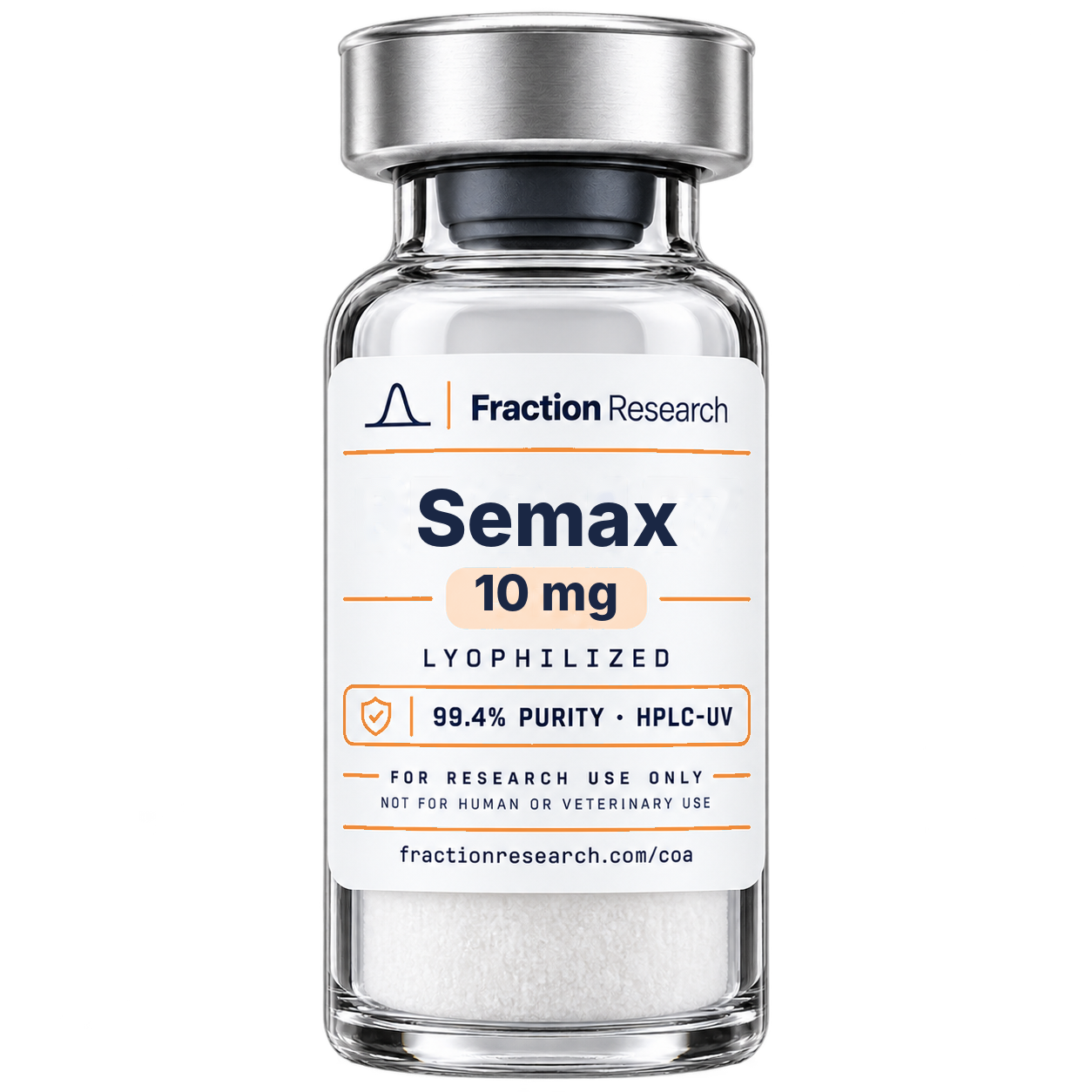
Semax is a synthetic heptapeptide based on the ACTH(4-10) fragment, extended with a proline-glycine-proline tail that confers resistance to enzymatic degradation. Like Selank it originates from Russian peptide research, and it is studied in the literature as a nootropic and neuroprotective research compound. Critically, the ACTH fragment on which it is based lacks the corticotropic activity of the full hormone, so the peptide is not a corticosteroid secretagogue.
Mechanistic context
The published mechanistic work centres on neurotrophic factor expression, particularly brain-derived neurotrophic factor and its receptor trkB, and on monoaminergic neurotransmission. This gives the compound two partially distinct proposed mechanisms — acute neurotransmitter modulation and slower changes in neurotrophin expression — operating on different timescales, which has direct consequences for how experiments should be timed.
Published findings
Eremin and colleagues (2005) reported that Semax activates dopaminergic and serotoninergic brain systems in rodents, addressing the neurotransmitter arm.
Dolotov and colleagues published two reports in 2006. The first described specific binding in rat basal forebrain and increased BDNF protein levels; the second reported regulation of BDNF and trkB expression in the rat hippocampus. Together these establish both a binding observation and a downstream expression change in a defined brain region.
Agapova and colleagues (2007) reported neurotrophin gene expression in rat brain under the action of the peptide, extending the expression findings across neurotrophin family members.
Scope and limitations of the evidence
The literature cited here is entirely preclinical, conducted in rats. Although Semax has been used clinically in Russia and clinical reports exist in the Russian-language literature, the peer-reviewed record cited on this page consists of rodent studies examining mechanism rather than controlled trials of outcome.
The binding work by Dolotov and colleagues describes specific binding in the basal forebrain, but no receptor has been molecularly identified for Semax. As with several compounds in this catalogue, the gap between demonstrated binding and an identified target should be kept in view when evaluating mechanistic claims from secondary sources.
Use in experimental design
The dual timescale is the key design consideration. Monoaminergic effects are acute and require sampling close to administration, whereas neurotrophin expression changes develop over hours to days. A single time point will capture one and miss the other, and studies that report null results should be examined for whether the sampling window matched the mechanism under test. Where BDNF is the endpoint, brain region matters — the cited work reports basal forebrain and hippocampal findings specifically rather than whole-brain changes.
Analytical and handling notes
Each lot is supplied with a certificate of analysis reporting RP-HPLC purity, mass identification by ESI-MS and label claim recovery, together with an independent ICP-MS elemental impurities report. Purity figures apply to the specific lot tested and should be read against the lot documentation rather than inferred from generic reference material. Storage guidance appears on the technical data sheet; the exact supplied salt form, counterion and hydration state are lot and supplier specific and should be reconciled against supplier documentation before quantitative work.
This material is supplied for laboratory research use only. It is not a drug, is not intended for human or veterinary use, and no statement above should be read as a claim of therapeutic effect.