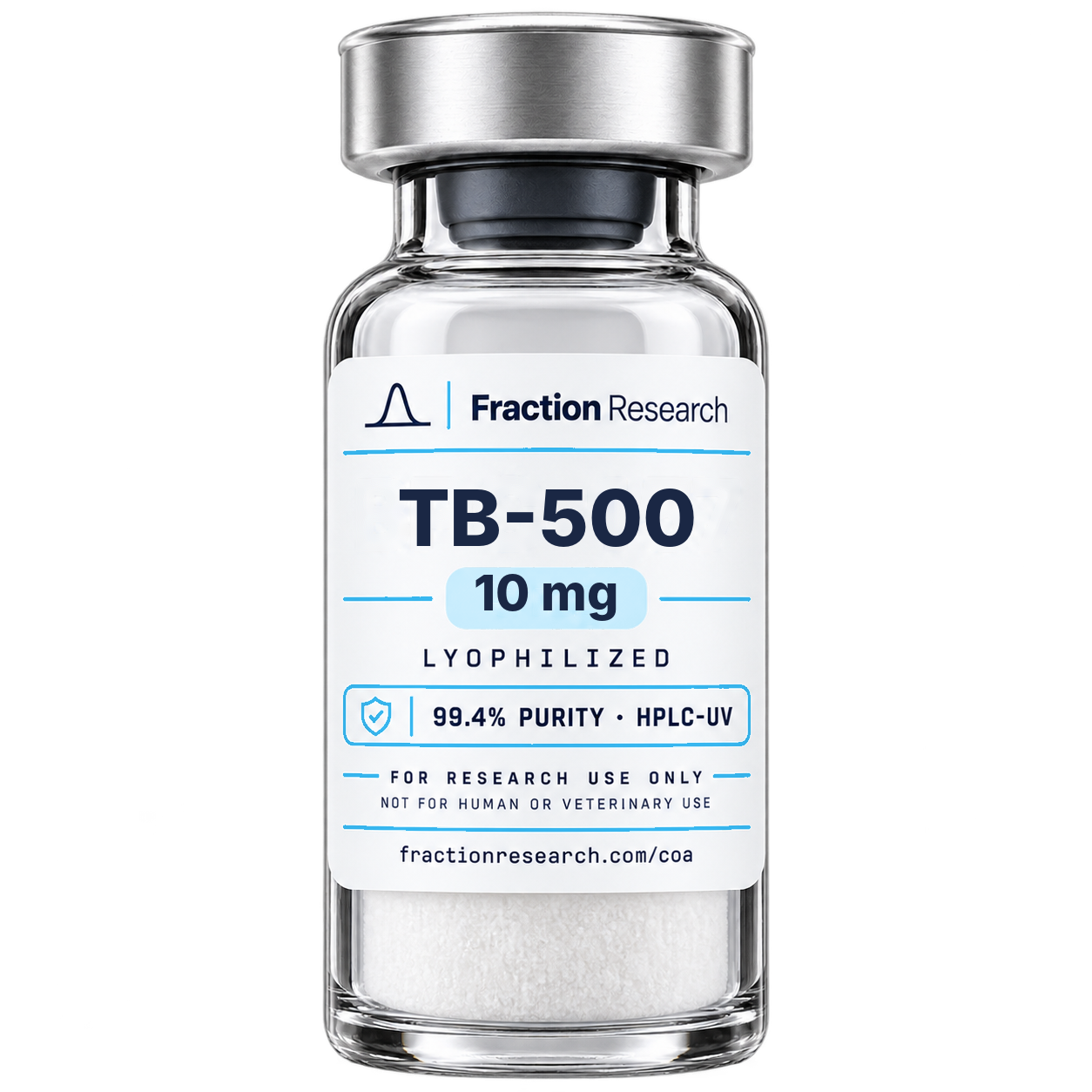
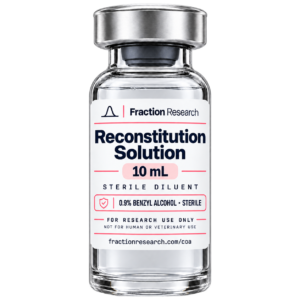
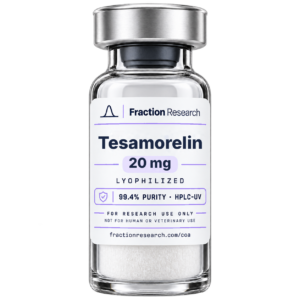
This material is supplied as thymosin β4, a 43-amino-acid peptide originally isolated from thymus tissue and now recognised as one of the most abundant intracellular proteins in many cell types. The designation TB-500 is used commercially and appears in some contexts to refer to a synthetic fragment; the material described here corresponds to full-length thymosin β4, consistent with the molecular weight and CAS registry number given in the specifications above, and the literature cited concerns the full-length peptide.
Mechanistic context
The principal established function of thymosin β4 is actin sequestration. It binds monomeric G-actin and regulates the pool available for polymerisation into filamentous F-actin, making it a direct regulator of cytoskeletal dynamics. Because cell migration depends on coordinated actin polymerisation, this activity provides a mechanistic basis for the effects on wound repair reported in the literature. A defined actin-binding domain within the sequence has been identified, and synthetic peptides containing that domain retain activity — a finding directly relevant to interpreting fragment-based products.
Published findings
Sosne and colleagues (2001) reported that thymosin β4 promoted corneal wound healing and modulated inflammatory mediators in vivo. A follow-up study (2002) examined corneal healing and inflammation following alkali injury, a more severe and standardised injury model.
Philp and colleagues (2003) reported that thymosin β4 and a synthetic peptide containing its actin-binding domain promoted dermal wound repair in db/db diabetic mice and in aged mice. This study is particularly informative because it compares the full-length peptide against the isolated actin-binding domain, addressing directly which portion of the sequence carries activity.
Li and colleagues (2007) reported that recombinant thymosin β4 promoted full-thickness cutaneous wound healing, using recombinant rather than synthetic material.
Scope and limitations of the evidence
The literature is preclinical, comprising rodent and rabbit wound models and in vivo corneal studies. No controlled human trial data appear among the cited work.
The most important interpretive point concerns molecular identity. Because full-length thymosin β4, the actin-binding domain fragment, and various commercial preparations differ, results reported for one form do not automatically apply to another. The Philp study is valuable precisely because it tests both. Investigators should confirm the identity of the material in hand against the mass reported on the lot certificate before relying on any of this literature, and should state the exact form used in published methods.
Use in experimental design
Wound healing endpoints are sensitive to model choice — incisional, excisional, alkali burn and diabetic impaired-healing models measure different biology and are not interchangeable. Animal age and metabolic status matter, as the db/db and aged-mouse arms in the Philp work illustrate. Where actin dynamics are the mechanistic endpoint, the ratio of G- to F-actin rather than total actin is the informative measure.
Analytical and handling notes
Each lot is supplied with a certificate of analysis reporting RP-HPLC purity, mass identification by ESI-MS and label claim recovery, together with an independent ICP-MS elemental impurities report. Purity figures apply to the specific lot tested and should be read against the lot documentation rather than inferred from generic reference material. Storage guidance appears on the technical data sheet; the exact supplied salt form, counterion and hydration state are lot and supplier specific and should be reconciled against supplier documentation before quantitative work.
This material is supplied for laboratory research use only. It is not a drug, is not intended for human or veterinary use, and no statement above should be read as a claim of therapeutic effect.