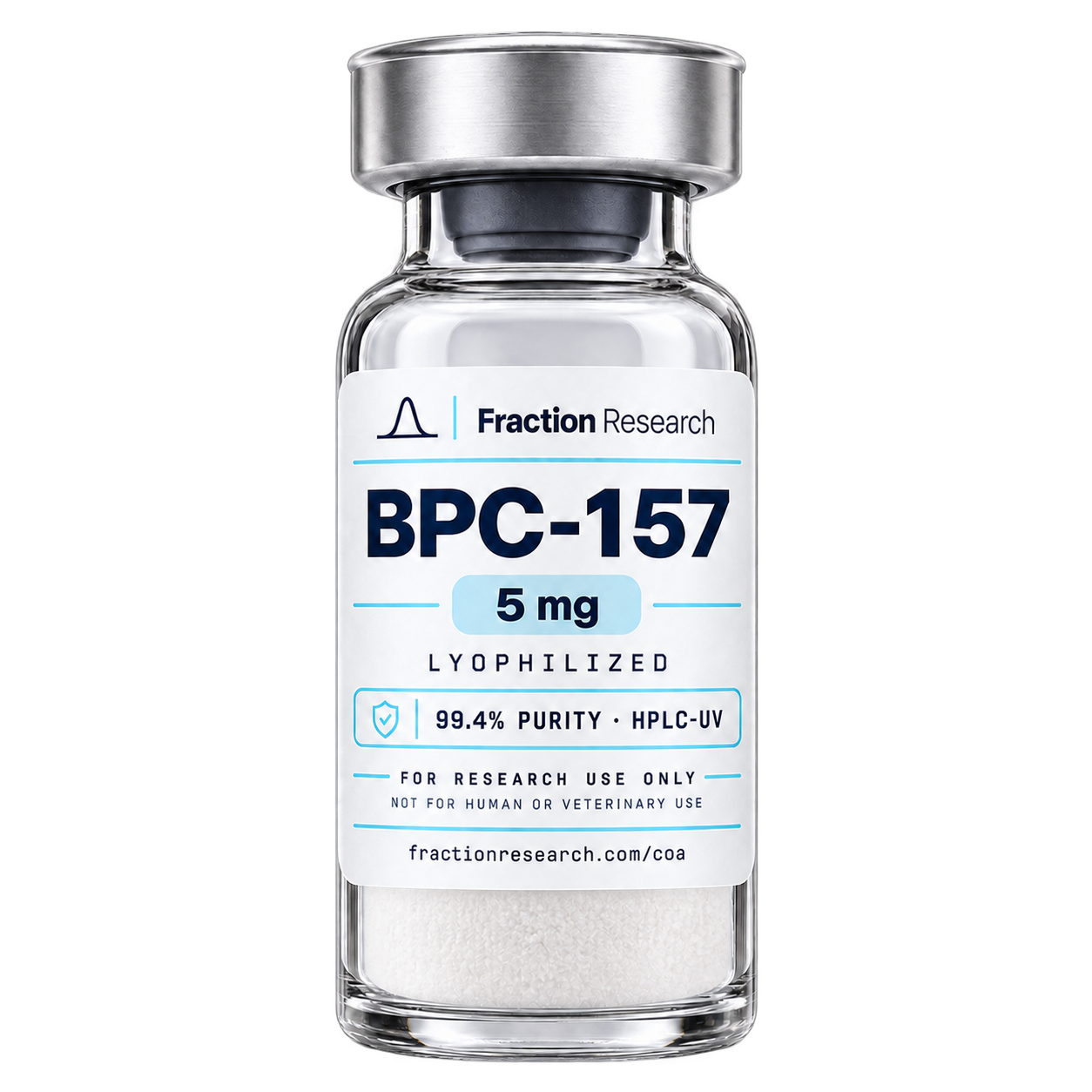
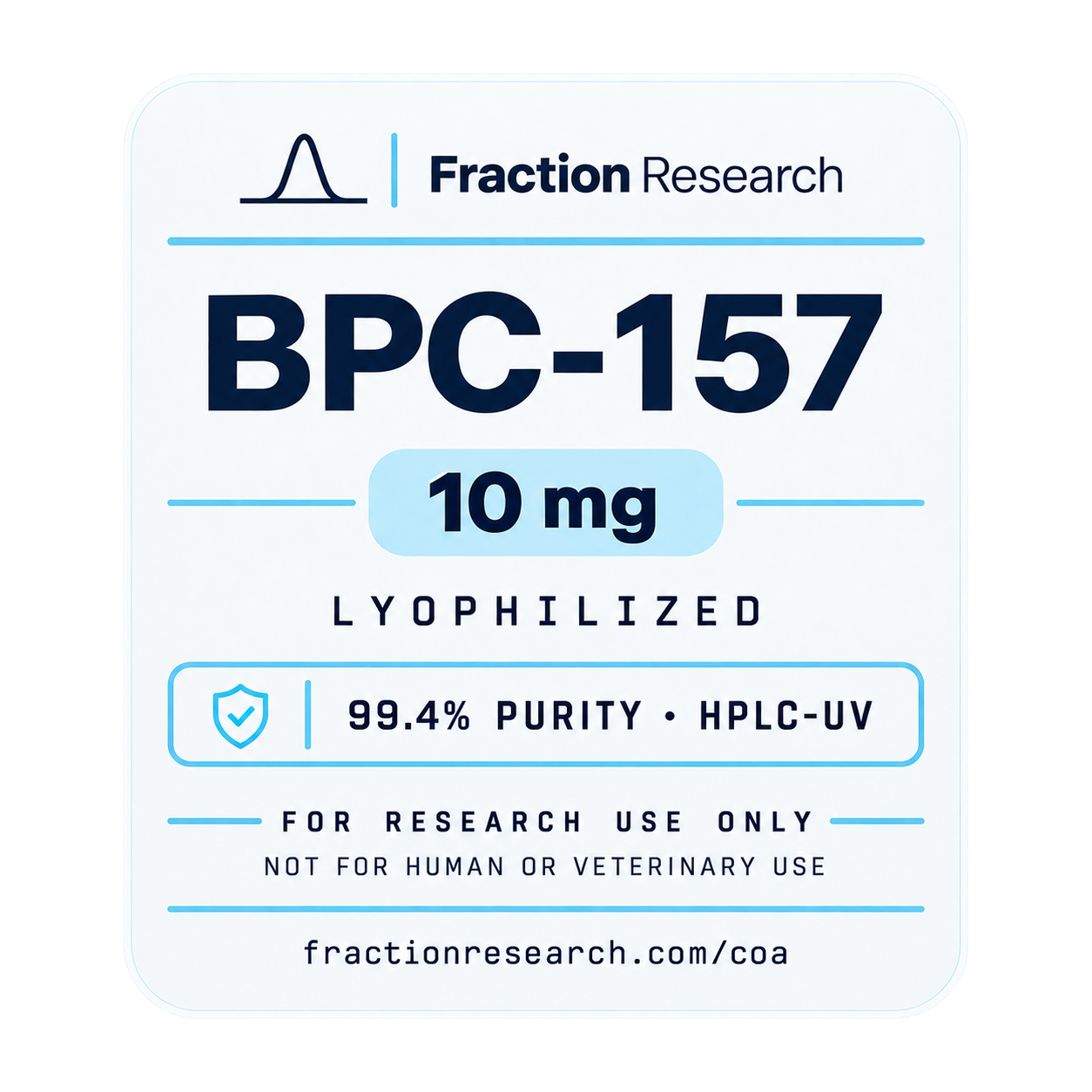
BPC-157 is a synthetic pentadecapeptide derived from a partial sequence of body protection compound, a protein identified in human gastric juice. It is composed of fifteen amino acids and is described in the literature as a stable gastric pentadecapeptide, a designation reflecting its reported resistance to degradation in gastric conditions relative to many peptides of comparable size.
Mechanistic context
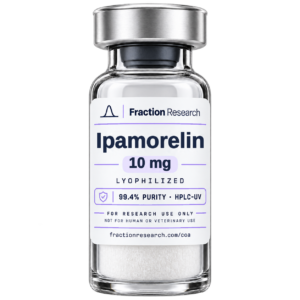
The published mechanistic work centres on angiogenesis and cellular migration rather than on a single identified receptor. No canonical receptor has been established for BPC-157 in the peer-reviewed record, which distinguishes it from compounds such as ipamorelin or kisspeptin where the binding target is defined. Investigations have instead examined effects on granulation tissue formation, new vessel development, and the behaviour of tendon-derived cells in culture. This is an important interpretive point: the literature describes observed tissue-level and cellular effects without resolving the upstream molecular pathway.
Published findings
Sikiric and colleagues (1999) examined effects on new vessel and granulation tissue formation, comparing the pentadecapeptide against H2-blockers, omeprazole and sucralfate — a design that situates it against established agents rather than against vehicle alone.
Staresinic and colleagues (2003) reported accelerated healing of transected rat Achilles tendon and, in parallel, stimulation of tendocyte growth in vitro. The pairing of an in vivo transection model with a cell culture arm is characteristic of this literature and allows tissue-level observations to be linked to a cellular readout.
Brcic and colleagues (2009) examined the modulatory effect on angiogenesis specifically in muscle and tendon healing. Chang and colleagues (2011) reported that the promoting effect on tendon healing involved tendon outgrowth, cell survival and cell migration, identifying the cellular processes through which the tissue-level observations may arise.
Scope and limitations of the evidence
The BPC-157 literature is preclinical in its entirety. The findings summarised here derive from rat models and cultured cells; no controlled human trial literature establishes effects in people. A substantial share of the published work originates from a small number of collaborating research groups, which bears on the weight that independent replication can carry.
The absence of an identified receptor is the most significant methodological limitation. Without a defined molecular target, it is difficult to demonstrate target engagement, to design competitive antagonist controls, or to distinguish specific activity from non-specific effects on wound environments. Investigators working with the compound should treat mechanistic statements in secondary sources with caution, as these frequently outrun what the primary literature establishes.
Use in experimental design
Tendon and muscle healing models are sensitive to surgical technique, animal age and immobilisation protocol, and these variables differ across the cited studies. Comparisons between reports should account for them. Where cell culture arms are used, the distinction between proliferation, migration and survival endpoints matters, since Chang and colleagues identified all three as contributing and they are not interchangeable measures.
Analytical and handling notes
Each lot is supplied with a certificate of analysis reporting RP-HPLC purity, mass identification by ESI-MS and label claim recovery, together with an independent ICP-MS elemental impurities report. Purity figures apply to the specific lot tested and should be read against the lot documentation rather than inferred from generic reference material. Storage guidance appears on the technical data sheet; the exact supplied salt form, counterion and hydration state are lot and supplier specific and should be reconciled against supplier documentation before quantitative work.
This material is supplied for laboratory research use only. It is not a drug, is not intended for human or veterinary use, and no statement above should be read as a claim of therapeutic effect.